Fernandes Joins Chelsea Disaster and United Cult Hero in Non-World Cup Transfer Elite
The World Cup has an uncanny way of inflating transfer valuations. Every four years, the tournament creates a feeding frenzy in the market—clubs scramble to recruit players who've caught the eye on football's biggest stage, only to discover their summer sensation doesn't quite translate to club level. Plenty succeed, mind you, but enough stumble to warrant healthy scepticism.
Yet while the World Cup captures headlines and wallets alike, the real money sometimes flows elsewhere. Even with the tournament expanded to 48 teams, significant deals still involve players sitting out the event entirely. Delving through the archives reveals a fascinating pattern of record-breaking signings for players who didn't make the cut.
The Current Record: Fernandes' Spurs Move
Mateus Fernandes has become the poster boy for this phenomenon. The 21-year-old Portuguese midfielder cost Tottenham £85m this summer—a staggering leap from the £42m West Ham could have secured him for just a year earlier, when he'd arrived from Southampton following their relegation.
Two seasons in the Premier League, each ending in the same dismal fashion, might ordinarily suggest caution. Yet Fernandes emerged from those disappointments with his reputation enhanced, not diminished. Manchester United's interest in the midfielder only intensified the bidding war, forcing West Ham to hold firm on their valuation.
One solitary cap for Portugal's senior side preceded this record fee. Fernandes' 21 appearances for the under-21s hint at a promising future, but the transfer market has effectively priced him among the elite teenage prospects. Only Moises Caicedo commands a higher fee among 21-year-olds. Interestingly, only England World Cup squad member Elliot Anderson's move to Manchester City has cost more this summer.
The Historical Precedent
Tracking back through tournament years reveals a curious cast of characters who've relocated without World Cup involvement.
Chelsea's January 2023 window—following the November-December 2022 tournament—saw Mykhaylo Mudryk arrive for £62m as the club's second-most expensive signing of that spending spree. Ukraine's World Cup absence meant Mudryk was available and, seemingly, undervalued. That assessment has proven disastrously wrong. The winger has managed just 10 goals in Chelsea colours and now faces a four-year ban, representing one of the most spectacular return-on-investment failures in recent memory.
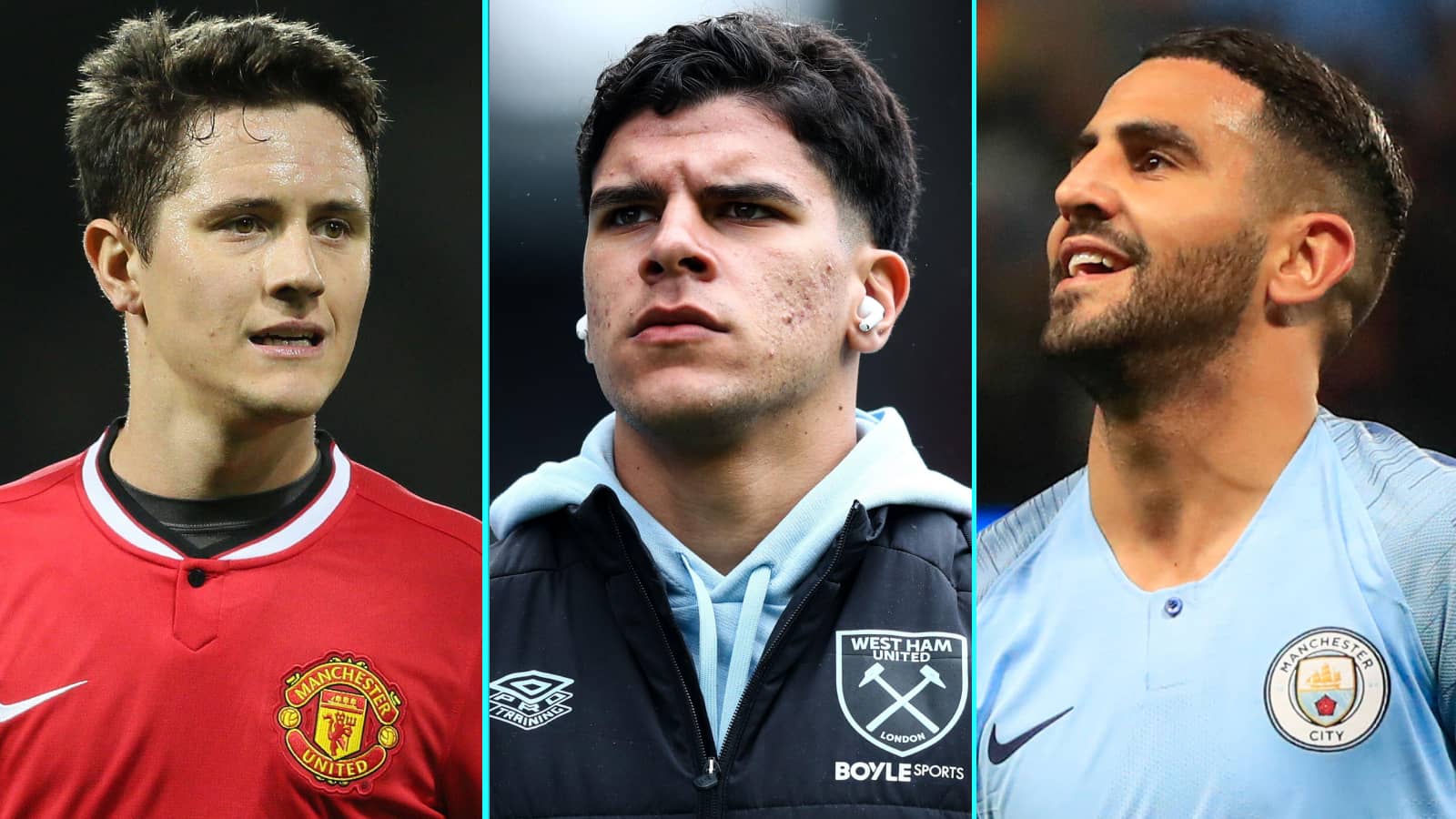
Wind back to 2018, and Manchester City captured Riyad Mahrez for £60m—then a club record—while N'Golo Kante was lifting the World Cup with France. Mahrez's Algeria hadn't qualified, leaving him available when City came calling. Unlike his Leicester teammate Kante, who'd already departed for Chelsea two years prior, Mahrez had waited patiently for his moment. City's gamble paid dividends: 236 appearances, 78 goals, and four additional Premier League titles followed.
The Manchester United Contingent
Manchester United's summer of 2014 proved particularly instructive. While Angel Di Maria and Luke Shaw both returned from Brazil with World Cup experience, Ander Herrera arrived without tournament credentials. Spain's group-stage exit meant the Bilbao midfielder was surplus to requirements in international terms—he'd only accumulate two senior caps for his country, arriving in 2016 and 2017 respectively.
Herrera's five-year stint at Old Trafford produced 189 appearances and steady, dependable service, hardly the stuff of legend but respectable nonetheless. The deal itself had been complicated by legal entanglements, pushing completion back further than anticipated.
Earlier Chapters
Mario Balotelli's 2010 move to Manchester City for approximately £24m came as Italy failed to retain their World Cup crown. At just 19, Balotelli wasn't deemed ready for tournament football by manager Marcello Lippi, despite his 28 goals in three years at Inter Milan. The subsequent 30 months proved, shall we say, eventful.
Real Madrid's 2006 acquisition of Mahamadou Diarra represented a straightforward step up for the Lyon midfielder, who'd just been named in the Ligue 1 team of the year. Mali's absence from World Cup qualification meant Diarra could focus entirely on his summer transfer, eventually winning La Liga in each of his first two seasons in Spain.
The Dutch Connection
The Netherlands' World Cup absences have generated notable transfers. Clarence Seedorf departed Inter for AC Milan in 2002 via a straightforward swap involving Francesco Coco, both valued at €22.5m. At 26, Seedorf was entering his prime precisely when his country had failed to qualify—a rare window for a player of his calibre to move without tournament distraction.
Earlier, in 1970, goalkeeper Jan van Beveren transferred from Sparta Rotterdam to PSV during a summer when the Netherlands hadn't even qualified for the previous World Cup.
The Italian Connection
Serie A dominated the 1990 transfer market, accounting for 18 of the summer's 19 most expensive deals. While Roberto Baggio represented the biggest mover with World Cup credentials, Davide Fontolan's move from Genoa to Inter occurred entirely outside international football—he never represented Italy at senior level.
Roberto Donadoni's 1986 switch from Atalanta to AC Milan came at age 22, before he'd established himself internationally. He'd eventually spend a decade at the San Siro. Similarly, Roberto Mancini was merely 17 when he left Bologna's second division for Sampdoria in 1982, beginning a 15-year relationship that yielded seven trophies.
Roberto Pruzzo's 1978 move to Roma from Genoa saw the striker eventually become the club's all-time leading scorer before Francesco Totti arrived—despite managing just six international caps and never scoring for Italy.
The Historical Record
Willy Brokamp managed six appearances for the Netherlands between 1970 and 1973 but never added to that tally after his 1974 move from MVV to Ajax, even as his compatriots reached the World Cup final.
Finally, the trail leads to 1966, when two players tied for the summer's most expensive transfer: Sergio Petrelli to Hellas Verona and Rinus Israel to Feyenoord. Petrelli never made a senior competitive appearance for Italy, while Israel did represent the Netherlands—a nation absent from that year's tournament, won by England with Alan Ball's move to Everton representing the summer's biggest transfer overall.
Compare options