World Cup 2026: The Old Guard Crumbles as Football's Power Structure Shifts Dramatically
A New World Order Takes Shape
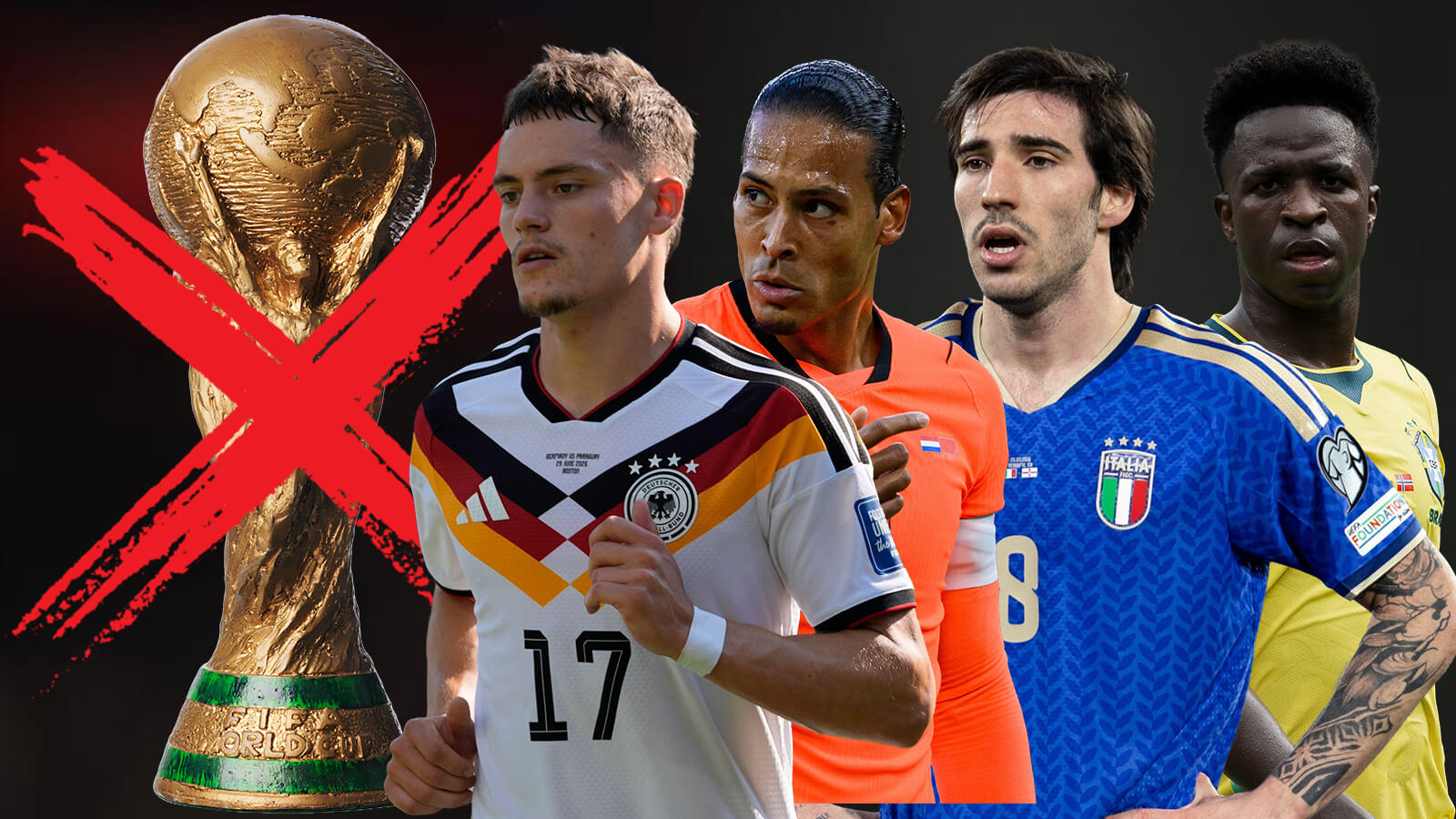
The quarter-final draw for World Cup 2026 marks a watershed moment in international football. For the first time ever, none of Germany, the Netherlands, Italy or Brazil will feature at this stage of the competition. It's genuinely unprecedented territory.
This represents nothing short of a seismic reversal in how global football power has distributed itself over the past two decades. The Champions League and World Cup have essentially swapped roles in the hierarchy of European dominance.
How the Pendulum Swung
Rewind twenty years, and the European Cup was genuinely competitive. Teams like Celtic, Feyenoord, Red Star Belgrade and Steaua București could win it. Reims, Partizan, Panathinaikos, Club Brugge and Malmö reached finals. The tournament was wide open because clubs drew their talent pools from limited geographic regions.
The World Cup, meanwhile, remained the exclusive playground of five nations. Between England's 1966 triumph and France's 1998 victory, every single final featured Germany, the Netherlands, Argentina, Italy or Brazil. Full stop.
Then came the money. The Champions League exploded. Player migration became the norm. Mega-clubs accumulated vast squads of elite talent, and suddenly the same continental powerhouses dominated year after year. Since Porto's surprise 2004 final run, every Champions League final has featured either one of Italy's big three, Spain's elite trio, Germany's two giants, PSG, or one of the Premier League's established six. Unless you're a mega-club from the top five leagues, the final is essentially off-limits.
The World Cup trajectory has moved in the opposite direction entirely. From 1998 onwards, France, Spain and Croatia reached finals—a development unthinkable in the previous era. Croatia's run was built on a golden generation, but the broader pattern is unmistakable: the traditional gatekeepers are losing their stranglehold.
Argentina's Lonely Vigil
Of those five historically dominant nations, only Argentina has scraped into the quarter-finals, and that's largely because they possess one of football's greatest ever players. They've laboured past World Cup minnows Cape Verde and Egypt to get there.
Where Argentina, Brazil, Germany, Italy and the Netherlands once stood, we now find Morocco, Belgium, Norway and Switzerland. This isn't random. Unlike mega-clubs, national teams have smaller pools of Champions League-calibre players based on geography. That levels things considerably. Morocco boasts the world's best full-back in Hakimi. Norway possess the world's finest finisher in Haaland. Meanwhile, Brazil and the Netherlands are selecting attacking talent from Bournemouth, West Ham, Sunderland and Brentford. Italy, save for Donnarumma, lacks genuinely elite Champions League operators. Germany's breakthrough player is Undav, a 29-year-old Brighton reject.
Will the final be Morocco versus Switzerland? Perhaps. More likely France versus Argentina. But the probability of an African nation, an Asian side, an American team (excluding Argentina or Brazil), or a smaller European outfit reaching the final is now significantly higher than the chances of a non-mega-club reaching the Champions League final.
The tables have genuinely turned.
England's Remarkable Transformation
Somewhere in this chaos, England have become genuinely likeable. How extraordinary is that?
For decades, the national team was an exercise in toxicity. The golden generation—United players resenting the whole endeavour under Ferguson's shadow, Liverpool lads more interested in flogging autobiographies, Chelsea's perpetual infighting—created a squad that seemed to actively disdain the supporters. Roy Hodgson's era represented the nadir: a manager who appeared to loathe the media, half the squad and essentially every aspect of the job.
The contrast with how Wales conducted themselves at Euro 2016 was stark. The Welsh fans and players seemed to actually enjoy one another's company. They sang together. They celebrated together. It felt unified.
In a decade, everything has shifted. Gareth Southgate's work with Owen Eastwood—the "Belonging" philosophy reframing the pressure and history of the shirt—has been transformative. The steady media drip of squad content, from the unicorn in Russia through Saka and Slabhead onwards, has created a genuine impression of togetherness. It's a remarkably low bar to clear, yet England hadn't managed it in 20 or 30 years.
What's striking is how that extends to individual perceptions. Supporters who previously carried club grievances into tournaments now find themselves charmed despite themselves. Gordon the diver, Rice the set-piece grappler and notorious time-waster, Pickford—their smiles prove infectious. You want them to succeed. That's a genuine sea change from the selfish, fractious squads of yesteryear.
The Broader Picture
The World Cup landscape of 2026 is messier, more unpredictable and ultimately more compelling than the formulaic dominance of previous eras. Whether that final is France-Argentina or something genuinely surprising remains to be seen. But the old certainties are gone. The gatekeepers have been breached. And somehow, improbably, England have become a team people actually want to watch—not out of tribal obligation, but because they seem to genuinely want to be together.
That's not nothing.
Compare options