Arsenal Corner Chaos Demands Rule Change, Not Just VAR Debate
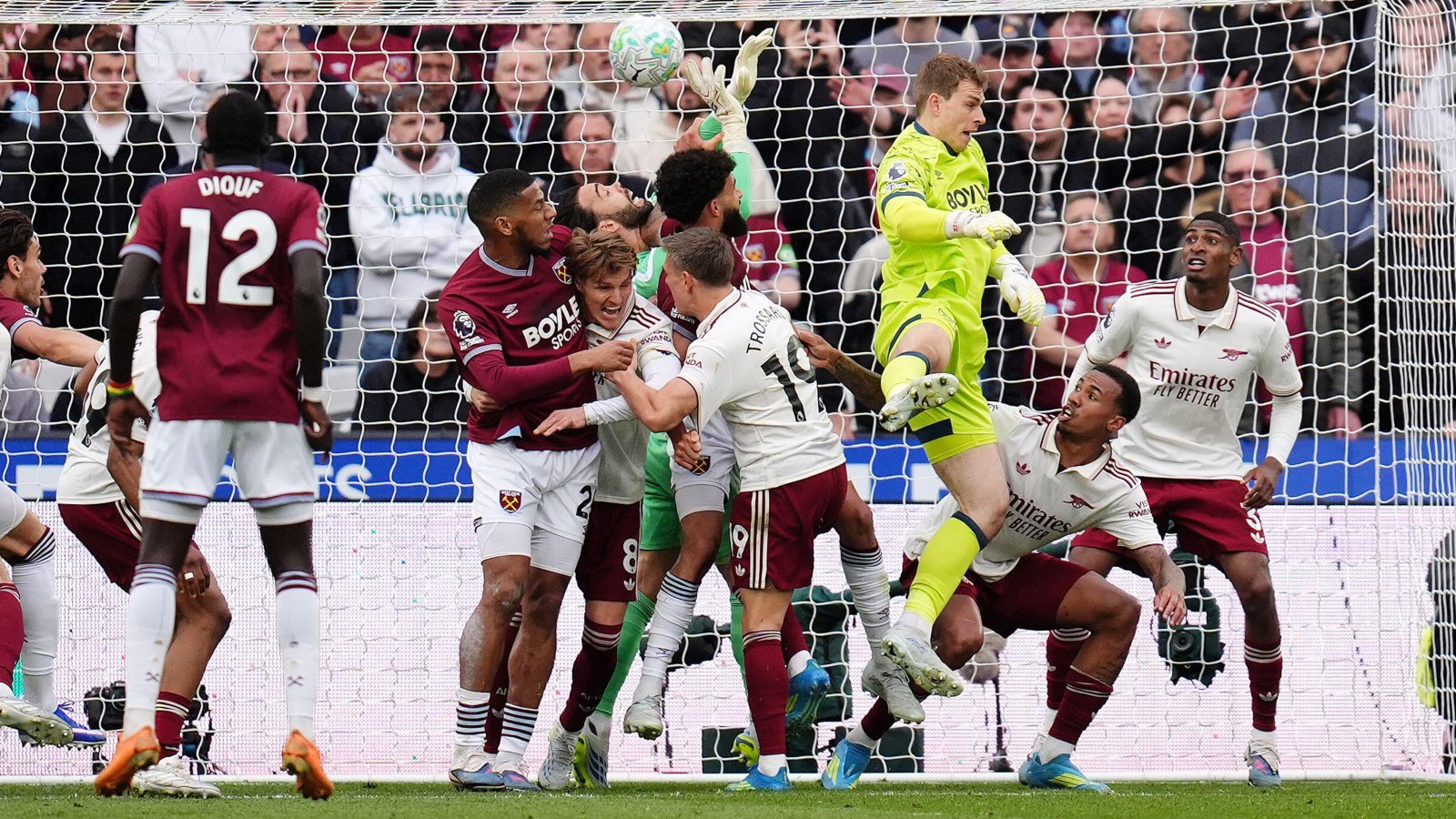
The West Ham goal that didn't count against Arsenal on Sunday was the right call. Few dispute that. But the fallout has opened something far more troubling than a single VAR decision: it's exposed how broken the entire framework for policing set-piece mayhem has become.
Let's start with the obvious. David Raya was fouled. His arm was held as he jumped to catch the ball—a clear, direct obstruction of his ability to do his job. By the laws of the game, it was a foul, the goal shouldn't have stood, and VAR correctly intervened. That part isn't complicated.
What is complicated—what's actually maddening—is everything else.
The Grappling Problem
Arsenal have become experts at industrial-scale corner chaos. The wrestling, the holding, the shirt-pulling, the bear-hugs masquerading as defending: it's orchestrated, it's relentless, and it's worse than anything their rivals attempt. But here's the thing—they're not alone in doing it. They're just better at it.
The real issue is that when VAR finally stops to review a corner, it creates an impossible situation. In the Raya incident, multiple West Ham players were fouled before the ball even reached the keeper. Mosquera was being held and pulled down. Gabriel was using both arms to grip. Rice and Odegaard had their arms locked around opposition players. Yet because VAR's remit is supposedly limited to correcting clear errors by the on-field official, and because the referee initially awarded the goal, suddenly we're in a grey zone.
Except we're not. By law, the more serious infringement takes precedence. Five Arsenal players committing four separate fouls against West Ham defenders is objectively more serious than one foul against a player already being fouled. That's not subjective. That's the rulebook.
The VAR Trap
Here's where it gets properly messy. VAR was introduced to help officials make better decisions. Instead, it's created a Pandora's box. By reviewing one incident in isolation, you're forced to either ignore the surrounding chaos or penalize it—and either choice feels wrong because you're applying different standards than you would anywhere else on the pitch.
Nobody pulls a shirt in the midfield without consequence. But at corners? It's treated like part of the game. That inconsistency isn't a feature—it's a design flaw.
The problem with VAR zealots insisting it makes the game fairer is that they're ignoring what actually happens. You get different emotional reactions year-to-year, month-to-month, even week-to-week. Creeping normalcy sets in. Behaviors that should be punished become normalized. Then suddenly, one incident gets flagged and everyone loses their minds because the standard has shifted.
What Actually Needs to Change
Forget the VAR debate for a moment. That's a symptom, not the disease.
The real solution is structural. Corners have become barely refereeable. The volume of contact, the coordination of fouls, the sheer chaos—it's become impossible to officiate fairly using the current framework. Rugby figured this out years ago. You can't manhandle before the ball's in play. Why can football?
Introduce a genuine rule. Limit the number of players allowed in the box for corners. Four defenders, four attackers, plus the goalkeeper. That's it. No more wrestling matches masquerading as football. Corners don't have to be stupid.
You could also temporarily substitute a goalkeeper if he needs treatment without delay, introduce defined time-outs, and stop the endless pre-corner chats. Players know the rules. They don't need reminding. They need enforcement.
The Bigger Picture
What makes this genuinely uncomfortable is that it challenges our ability to tell a coherent story about what we're watching. Arsenal have weaponized chaos at set pieces. They've worked it out, coached it, perfected it. And now we're left trying to explain why five players bear-hugging opposition defenders shouldn't result in a penalty.
The arguments don't hold up. Either it happened "second," which is legally irrelevant, or it's just vibes—and if we're okay with vibes, why have VAR at all?
The Raya decision was correct. Arsenal's pattern of behavior at corners is excessive and tactical. West Ham's frustration is justified. And the whole mess points to one inescapable conclusion: the laws need changing, not just the VAR protocols.
Until football addresses the structural problem—the fact that corners have become a barely refereeable contact sport—we'll keep having these arguments. Same controversy, same anger, same inability to reach consensus.
The goal was rightly disallowed. But Arsenal have revealed a weakness in the game itself. That's what needs fixing.
Compare options