VAR's Paradox: When Getting It Right Feels Completely Wrong
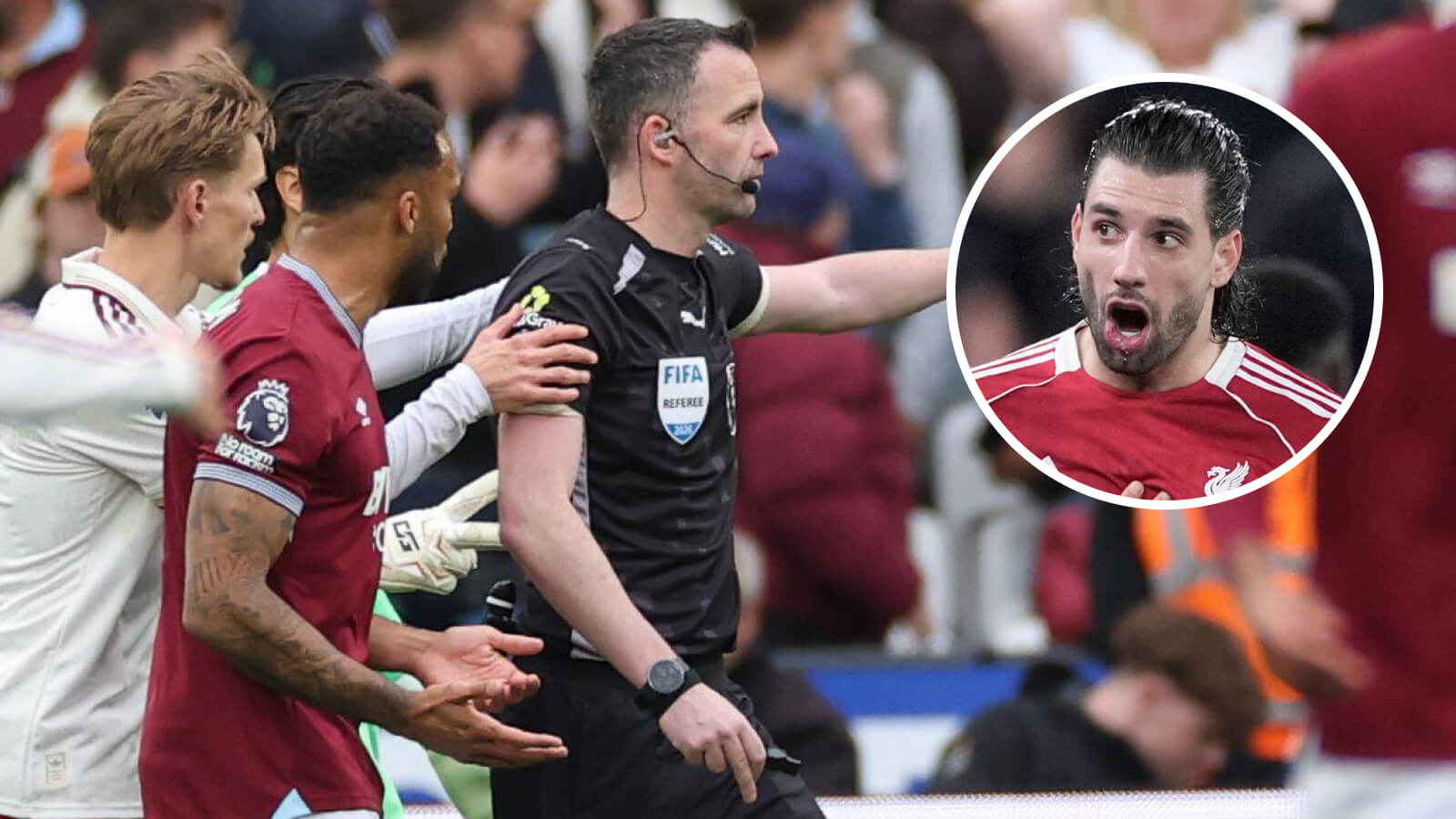
The fallout from West Ham's disallowed equaliser continues to rumble on, and a clearer picture of what VAR has become is emerging. Turns out most supporters never actually wanted perfect decisions. What they wanted was football with the obvious rough edges smoothed away—or, more honestly, decisions that favoured their own team.
The human brain is peculiar that way. We're hardwired to remember every call that went against us whilst conveniently forgetting those that went our way. Ask any fan whether their club gets a rough deal from officials and you'll get an emphatic yes, delivered with absolute certainty. Yet somehow, when technology arrived to iron out those injustices, it turned out we didn't quite want what we'd been asking for.
What we got instead was a system obsessed with objective correctness at the expense of everything else—drama, humour, the sheer absurdity that makes the sport worth watching. Turns out we'd rather have entertaining chaos than technically accurate tedium.
The real problem with VAR isn't when it gets things wrong. That's easy to rage about. The killer blow is how often it's "wrong" even when it's technically right. Here are ten such moments.
8-10: The Toenail Offside Trilogy
Pick any three marginal offside decisions you remember. There's been countless ones by now—Teemu Pukki had a particularly ridiculous-looking effort ruled out against Spurs at one point. The issue is that these decisions are technically sound but spiritually bankrupt. They highlight just how poisonous the phrase "technically correct" becomes when you hand control to soulless algorithms and pedantic analysis.
Before VAR, there was acceptance that millimetre-perfect accuracy in offside decisions simply wasn't achievable. A linesman had to track three moving elements simultaneously: the pass, the attacker, the defender. Miracles happened that they weren't more wrong. The phrase "just about level" used to carry genuine weight. People accepted it.
Then technology arrived and decided that "just about level" was no longer acceptable. A toenail offside? That's offside now. Your old understanding of common sense? Obsolete.
7: Postecoglou's Hollow Gesture
Late last season, VAR chalked off a Pape Sarr equaliser at Chelsea after spotting a foul on Moises Caicedo in the build-up. Mundane stuff, and it barely mattered—Spurs would've lost anyway because they always do at Stamford Bridge.
What made this intervention noteworthy was Ange Postecoglou's response. He cupped his hand to the away supporters in a gesture that screamed fractured relations between manager and fanbase. When questioned, his explanation rang hollow: he simply wanted them to cheer because they'd scored a cracking goal. Since Principal Skinner's excuse about being in a burlesque house for directions, few have sounded more unconvincing.
6: Bernardo's Corner Genius
John Stones headed home an injury-time winner against Wolves in October 2024, initially ruled out for offside against Bernardo Silva. But here's where it gets clever: while Bernardo was clearly getting in goalkeeper Jose Sa's way as the corner arrived, by the time Stones headed the ball, he'd ducked out of the way entirely.
Unless you wanted to penalise the lightest of contact between Bernardo and Sa—which recent discourse suggests you don't—the goal had to stand. Bernardo couldn't be in an offside position when the corner came in. He was only in one once Stones headed it, by which point he'd stopped interfering.
Goal given. Correctly, cruelly, confusingly. But above all correctly. Wolves, to their credit, remained the sole Premier League club willing to challenge VAR's existence. They've since been relegated, which rather proves the point about nobody else having the courage to join them.
5: Luis Diaz Against Spurs
Hugely controversial at the time, yes, but he was miles offside. The process was sound.
4: The Brighton Penalty Postscript
Manchester United's astonishing 3-2 win at Brighton featured perhaps the most ridiculously correct VAR decision imaginable. Deep in added time, Harry Maguire's header was blocked by Neal Maupay's raised arm. Referee Chris Kavanagh missed it, but VAR corrected him and sent him to the monitor. It was definitely handball. Bruno Fernandes scored the penalty. All very good process.
The problem? Kavanagh had already blown for full-time before the handball incident was reviewed. There's technically nothing wrong with this under VAR protocols—they're specifically written to allow exactly this scenario. But if you can't grasp why Brighton felt robbed, you're missing what makes football matter. VAR didn't just ruin a goal celebration; it poisoned the emotional release of the final whistle itself.
3: Wolves' Heroic Meltdown
Max Kilman nodded in a 99th-minute equaliser for Wolves against West Ham, and celebrations erupted. Then VAR intervened: Tawanda Chirewa was in an offside position blocking Lukasz Fabianski's view. Goal disallowed.
Most pundits were unhappy, though few acknowledged they were actually upset about dramatic theatre being obliterated by robotic authority. Gary O'Neil called it "possibly the worst decision I have ever seen," which was powerful if somewhat divorced from reality. Wolves chairman Jeff Shi posed the real question: is VAR actually what football wants or needs?
Wolves pushed for its abolition. Zero other Premier League clubs joined them—nineteen cowards and one brave pack of wolves. They've now been relegated, which makes you think.
2: Callum Wilson's Arsenal Disallowance
This correct VAR decision sparked utterly contradictory takes. Some declared it the death of football. Others claimed it ended all arguments against technology. One journalist even demanded the entire Premier League season be replayed because, apparently, a decision wasn't perfectly consistent with every other similar incident all season.
Gary Lineker captured it best: "Probably a foul but that's not what VAR is supposed to be, is it?" Except it absolutely is what VAR is supposed to be. It will spot and penalise fouls even when they're trivial and far funnier if ignored.
The deeper issue is that VAR has destroyed corners. Multiple players fouled multiple other players, including those who were themselves fouling David Raya. Before VAR, referees would simply tell everyone to pack it in, or apply the useful unwritten law of "six of one, half a dozen of the other" and move on. Now we get red circles drawn on blurry screenshots and manufactured outrage about consistency.
Goalline technology, by contrast, works beautifully—instant, reliable, inarguable decisions about objective facts without spoiling the joy of goals. Nobody argues for removing it. That rather demolishes the pro-VAR lobby's favourite argument that opponents are simply anti-technology luddites.
1: Haaland and Szoboszlai's Perfect Test
This was the moment everything should have clicked into place. Dominik Szoboszlai desperately fouled Erling Haaland to stop a meaningless goal late in a Manchester City versus Liverpool match. Haaland then fouled him back and scored. The original referee let it stand.
VAR couldn't let that happen. The advantage rule doesn't give Haaland licence to foul in return. So: no goal, Szoboszlai sent off, everyone miserable except those who worship rules.
The original decision had natural justice and was infinitely funnier. But VAR cannot compute emotion or context. It only sees offences. The joy-sapping machine was bound to reach only one possible conclusion.
Yet somehow this perfect litmus test didn't trigger mass rebellion. People said "I like VAR, but it's wrong here" rather than realising this was the moment to understand what VAR actually is—a system that prioritises impossible objective perfection over the entertainment and spontaneity that makes football matter.
Notice how many egregious "technically correct but deeply unsatisfying" VAR decisions arrive in injury time? Almost like we all just love wild late drama, isn't it.
Compare options